


So, what’s going on? And more importantly where does that leave you?
Let’s unpack it. No fluff. Just the facts, the figures, and a few things you’re probably thinking but haven’t said out loud.
Coal: Still king, but the crown’s slipping
Coal’s been South Africa’s heavyweight champ for decades, powering everything from household heaters to export contracts with India, China and Europe. But lately? It’s a bit of a circus.
Between inconsistent rail performance from Transnet, protest-related disruptions, and pressure to “greenify” the grid, a lot of exporters are ditching rail and leaning heavier on road freight.
Which sounds like good news for transporters, right?
Well… sort of.
You’ve got more trips, sure. But you’ve also got more wear and tear, higher diesel bills, and bottlenecks at Richards Bay. And let’s not even get started on the rising cost of tyres or the price of toll gates. You’re working harder but not always smarter.
Chrome: Holding steady… barely
South Africa’s still the world’s largest chrome producer. That’s not changing overnight. But here’s the tricky bit, prices aren’t exactly playing nice.
Global demand from stainless steel manufacturers has dipped slightly, and China’s got its eye on cheaper sources. Local chrome producers are cutting costs, squeezing transport budgets, and pushing for shorter lead times.
So what happens?
You get the job but suddenly, you’re expected to move 40 tons of chrome with the urgency of an ambulance and the fuel budget of a motorbike.
This is where your route planning better be watertight. Because one detour, one bad overnight spot, or one stop with overpriced diesel can wipe out your margin faster than a flat tyre in Kuruman.
Copper: The wildcard in the mix
Copper’s got a glimpse of promise, especially with global electrification driving demand. Batteries, EVs, renewable grids, they all need it. Zambia and the DRC are sitting on mountains of it, and SA’s route into Beitbridge and beyond is a key corridor.
But there’s a problem: the border.
Delays at Beitbridge are a special kind of pain. You can lose a full day there if the stars don’t align and with power outages, system crashes, and congestion on both sides, the stars rarely do.
So yes, copper might be booming. But only if you can actually get it moving.
Here’s the catch: It’s not just about the metal anymore
It’s about the journey. Literally.
Whether you’re hauling chrome from Rustenburg to Richards Bay, coal from Mpumalanga to Maputo, or copper from the border down to Joburg, your value isn’t just in the cargo. It’s in how smartly you manage every kilometre.
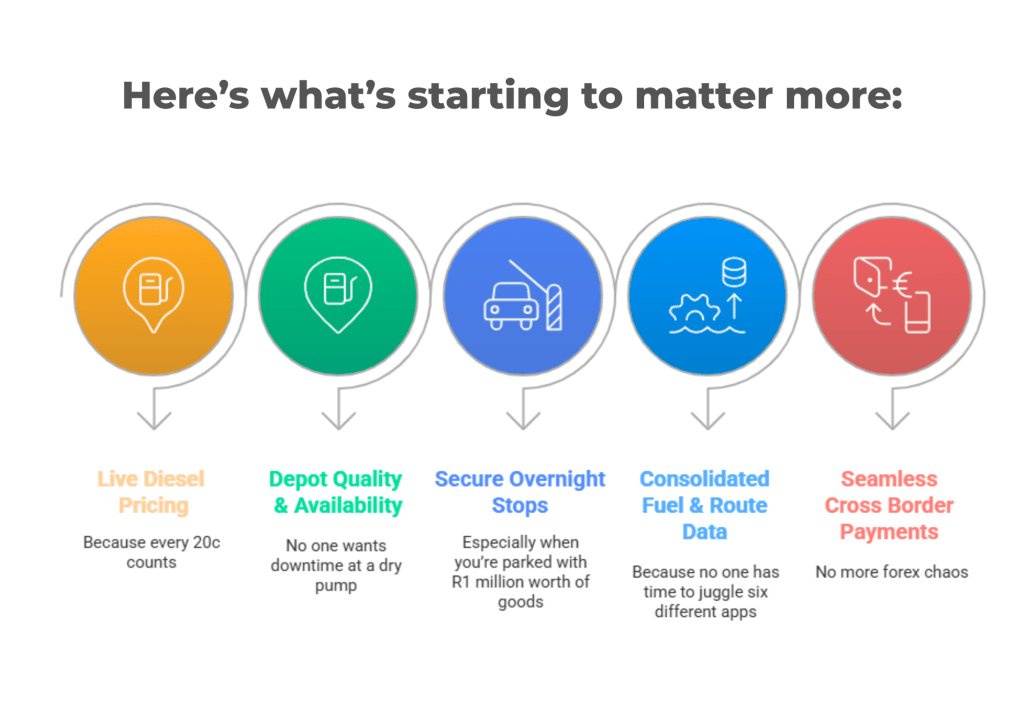
Here’s what’s starting to matter more:
- Live diesel pricing: because every 20c counts
- Depot Quality and Availability: no one wants downtime at a dry pump
- Secure Overnight Stops: especially when you’re parked with R1 million worth of goods
- Consolidated Fuel and Route Data: because no one has time to juggle six different apps
- Seamless Cross Border Payments: no more forex chaos
Sound familiar?
So what now? Adapt or stall
Let’s not sugar-coat it. The coal/chrome/copper corridor is still a goldmine but only for the operators who tighten up their systems, cut the fat, and keep their trucks running lean.
That’s where platforms like TFN step in offering integrated solutions to help you plan smarter, refuel cheaper, and sleep better at night knowing your next stop’s covered.
The industry isn’t slowing down. It’s just getting sharper. And whether you’re a solo rig owner or running a 40-truck fleet, the difference between profit and pain might just be how well you understand the game.
Final thought:
You don’t need to be hauling platinum to make your run valuable. You just need visibility, control, and a fuel partner who understands that margins don’t live on spreadsheets, they live on the road.
Resources
- https://kpmg.com/us/en/taxnewsflash/news/2024/02/tnf-south-africa-increase-carbon-tax-rate-carbon-fuel-levies.html?utm_source=chatgpt.com
- https://www.cnbcafrica.com/2024/south-africas-revised-carbon-tax-to-be-harsher-but-with-more-offsets-treasury-says/
- https://www.zawya.com/en/economy/africa/south-africa-can-carbon-tax-on-shipping-help-maritime-commerce-and-climate-change-xitlidai
- https://www.elibrary.imf.org/view/journals/002/2023/195/article-A003-en.xml
- https://www.deloitte.com/za/en/services/tax/perspectives/south-africas-carbon-tax-changes-and-implications-for-taxpayers.html https://www.resbank.co.za/content/dam/sarb/publications/occasional-bulletin-of-economic-notes/2024/carbon-taxation-in-south-africa-and-the-risks-of-carbon-border-adjustment-mechanisms-%20april-2024-01.pdf