


Training: more than ticking a box
Driver training has long been part of compliance, but it’s evolved into something much more valuable. It’s not just about handling a truck, it’s about handling pressure, handling unpredictable road conditions, and even handling your own body when exhaustion sets in.
Modern training often includes:
- Fatigue management techniques: recognising early signs and planning breaks before it’s too late.
- Defensive driving: anticipating risks on highways and in built-up areas.
- Digital systems: using telematics and dashboard apps to monitor fuel, routes, and schedules.
Think of it this way: the best trucks, the best tires, even the best logistics plan can fall short if the person behind the wheel isn’t fully supported. Training isn’t an event, it’s an ongoing investment in safety and confidence.
Route planning that fights fatigue
Fatigue creeps in long before anyone admits it. You know that glassy-eyed stare drivers sometimes get after a 14-hour shift? That’s not just tiredness; that’s danger. Proper route planning can help fight it before it sets in.
Fleet managers who build schedules around realistic driving hours and not just delivery deadlines, create safer roads and happier teams. Factoring in:
- Rest windows tied to actual rest-stop availability (not just “pull over wherever”).
- Traffic patterns that reduce wasted time in queues.
- Alternative routes that keep drivers moving steadily instead of sitting in congestion.
It’s a bit like sport: pace matters. You wouldn’t expect a runner to sprint a marathon; the same logic applies to logistics.
Rest stops: more than a parking bay
Now, let’s talk about where drivers put their heads down. Too many still end up in unsafe or poorly lit lay-bys because there’s “nothing else nearby.” That’s a problem, and it doesn’t have to be.
Safer rest options, whether it’s truck stops with overnight facilities, fuel stations with secure parking, or designated company yards, give drivers not only rest but peace of mind. After all, who can sleep properly when they’re worried about cargo theft or vehicle damage?
Adding basic services like showers, food, and Wi-Fi might seem like a luxury, but they go a long way towards boosting morale. And morale, believe it or not, directly links back to performance and retention.
Why it matters for the business
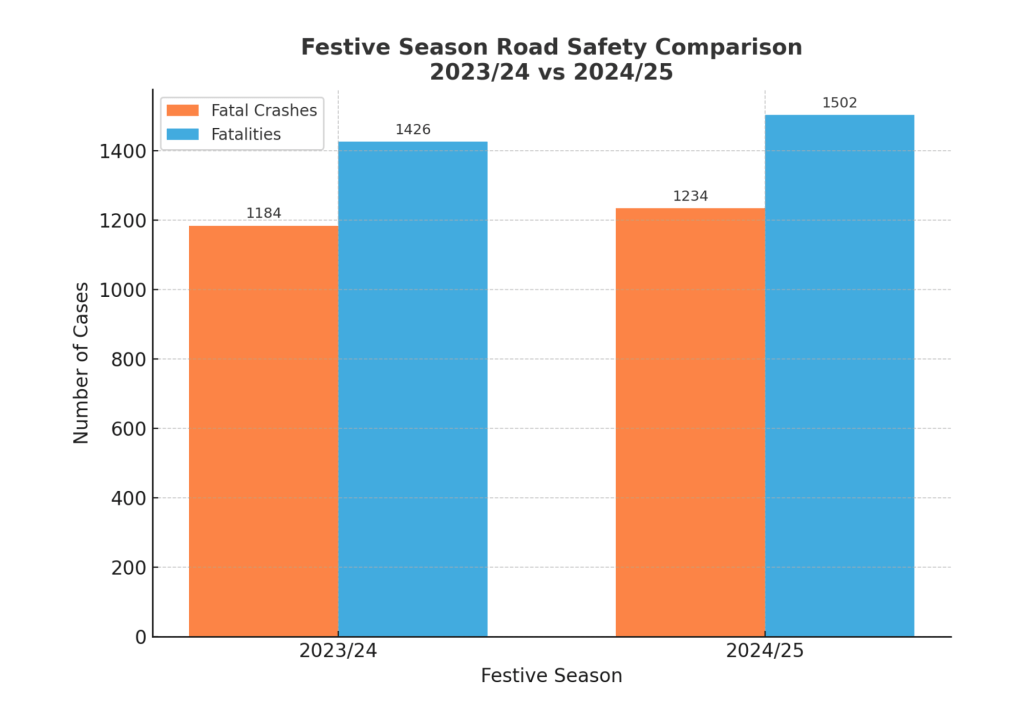
Over the December 2024 to January 2025 festive season, South Africa endured a deeply troubling road toll: 1,502 lives lost across 1,234 fatal crashes, a 5.3% spike in fatalities and a 4.2% rise in crashes compared to the previous year. Disturbingly, pedestrians accounted for 41% of all deaths, with Gauteng seeing the highest pedestrian fatality rate at 63.8%, followed by Western Cape (53.9%) and KwaZulu‑Natal (44.3%). Moreover, among 18 major crashes, those involving multiple fatalities, minibuses featured in over half.
Looking after drivers isn’t just the right thing to do, it makes business sense. Well-trained drivers mean fewer accidents. Smarter routes mean better fuel consumption. Safe rests mean less cargo loss and fewer sick days. The return on investment is real, even if it shows up as both lower costs and quieter nights knowing your fleet is safer.
Final thought
Transport has never been easy work, and drivers carry much of the burden. But when training builds confidence, routes ease the strain, and rests provide real safety, you’re not just moving goods, you’re moving people forward with dignity.
And that’s worth planning for, kilometre after kilometre.
Need to keep your citrus loads moving safely and efficiently?
TFN’s all-in-one fuel and logistics platform is designed to support the people keeping South Africa’s citrus industry alive: https://dev.tfn.co.za/fuel-price/
Resources
- https://www.moneyweb.co.za/news/south-africa/petrol-price-drops-in-august-but-diesel-climbs/#:~:text=According%20to%20a%20statement%20issued,up%2063%20cents%20per%20litre
- https://iol.co.za/news/south-africa/2025-05-22-the-poor-will-be-hit-hardest-treasury-slammed-for-increasing-fuel-levy-in-2025-budget-3-0/
- https://thestar.co.za/motoring/industry-news/2025-08-12-diesel-price-hiking-cycle-appears-to-be-over-with-relief-expected-in-september/
- https://www.news24.com/business/economy/petrol-diesel-prices-may-be-on-track-for-cuts-next-month-20250815-0716
- https://www.thesouthafrican.com/news/heres-the-good-petrol-and-great-diesel-price-forecast-for-september-2025/